Position under active recruitment:Research and development of technologies for forecasting the future of the global environment
-

Through future-forecasting simulations, we aim to realize coexistence with diverse organisms.
To create a prosperous society and a global environment where diverse organisms coexist, we will integrate and analyze ocean sensing data across multiple domains. It will thus become possible to efficiently model complex marine ecosystems significantly impacted by human activities. Moreover, through high-precision, high-speed marine simulation, we will clarify the path to ecosystem recovery of the global environment.
What are the key points of technologies for forecasting the future of the global environment?
We are working on marine-ecosystem simulations, which consider the impact of climate change as one factor, in coastal areas heavily affected by human activities.
■We perform simulations, which consider not only physical but also biogeochemical phenomena of the ocean as factors, in a high-speed computing environment to forecast the future of marine ecosystems, including the effects of climate change and human activities.
■By integrally analyzing diverse sensing data from various marine areas (sea surface, sea level, underwater, and seabed) and in-situ observation data such as eDNA, we can grasp the real-time status of marine ecosystems.
■In collaboration with partners worldwide, including NTT Group companies, we will also promote social implementation, such as field observations in coastal areas and application to fisheries and aquaculture.
Recruitment overview
1Research and Development on Marine Sensing

-
Details of work
Depending on your experience and abilities, you will be in charge of one or more of the following.
You will be engaged in research and development, centered on state-of-the-art underwater acoustic technology, aimed at the social implementation and operation of ocean sensing data.
Focusing on large-scale data acquired through underwater acoustic observations, you will be responsible for building analysis algorithms and data-processing platforms that function stably in real environments by utilizing signal processing, machine learning, and AI technologies.
Beyond the research phase, we aim to implement underwater sensing technology that enables to ocean-environment monitoring, marine-ecosystem assessment, and future prediction while emphasizing implementability, reproducibility, and scalability with an eye toward on-site observation and operation.- Design, implementation, and advancement of signal processing and analysis algorithms for underwater acoustic data (e.g., noise suppression, feature extraction, time-series analysis, quality control)
- Development and operational evaluation of state estimation, anomaly detection, classification, and prediction models utilizing machine learning and AI technologies
- Construction of analysis flows and processing pipelines integrating underwater acoustic data with other types of sensor data (e.g., ocean observation and satellite/geospatial data)
- Automation of data processing and examination of scalable analysis methods and systems for observations in real marine areas
- Technology validation, performance evaluation, and use-case consideration with a view toward social implementation and continuous operation

-
Required knowledge, skills, abilities, and experience
Essential skills: Must have the following skills or experience
- Logical thinking and technical-writing proficiency
- Basic knowledge of information science
- Basic knowledge and implementation experience of programming languages such as Python
- Skills and experience in project management and coordination with external stakeholders
- Language proficiency: Ability to handle international presentations and paper writing
Desirable knowledge, skills, abilities, and experience
- Knowledge or research/development experience in signal processing and analysis (including application experience from related fields) targeting underwater acoustic data or similar time-series/wave data (e.g., acoustic signal processing, spectral analysis, time-series analysis, active/passive acoustics, and acoustic tomography)
- Experience in data preprocessing, feature extraction, and quality control for sensor data (e.g., acoustic, optical, and environmental sensors)
- Knowledge or practical/research experience in data analysis and modeling utilizing machine learning and AI technologies (e.g., anomaly detection, classification/regression, clustering, and deep learning)
- Experience in integrated analysis and visualization of large-scale and diverse data (e.g., underwater acoustics, ocean observation, and satellite/geospatial data)
- Experience in analysis and evaluation combining numerical simulations or model results with observational data
In addition to the above abilities and knowledge, research and development in fields such as information engineering, acoustic engineering, applied mathematics, physics, and data science that can be applied to this role.

-
Qualities we are looking for
- A desire to take on new research themes outside existing frameworks
- The ability to proactively communicate with team members and global collaborative partners having diverse values
- A person who actively takes on challenges in unknown fields with great curiosity and ambition
2Research and Development on Marine Simulation
-
Details of work
To quantitatively evaluate and predict the impact of nutrient salts flowing from forests and agricultural lands into coastal waters via rivers on the Marine ecosystem, we are seeking an experienced researcher who can understand observational data and appropriately incorporate it into numerical models.
We aim to develop a high-resolution coastal marine simulation model that integrates the entire area from river basins to coastal zones, utilizing satellite observation data and in-situ observation data, to predict nutrient cycling and ecosystem responses.
Furthermore, we are looking for individuals who are not only interested in model development but also in observation planning and data acquisition itself and who can advance research by moving back and forth between observation and simulation.- Studying and implementing methods to understand and analyze satellite observation data and in-situ observation data and incorporate the analysis results into coastal marine numerical models
- Designing, building, and enhancing coastal marine simulation models that consider nutrient runoff from forests and agricultural lands and river inflows
- Planning and executing predictive calculations using models that include physical and biogeochemical processes in coastal areas
- Model validation based on observational data, sensitivity analysis, and evaluation of prediction accuracy
- Implementing and operating high-resolution, large-scale numerical simulations utilizing supercomputers, HPC, and cloud environments
-
Required knowledge, skills, abilities, and experience
Essential skills: Must have the following skills or experience
- Logical thinking, technical writing
- Basic knowledge of information science
- Basic knowledge and implementation experience in programming languages such as Python, Fortran, and C
- Ability to perform basic shell operations on UNIX-like systems (e.g., Linux and macOS)
- Language proficiency: Level capable of international presentations and thesis writing
Desirable knowledge, skills, abilities, and experience
- Basic and specialized knowledge in Earth-science fields (e.g., oceanography, atmosphere, meteorology, climate, geophysical fluid dynamics, biogeochemistry, ecosystems, and chemical cycles)
- Experience in numerical simulations or related research concerning coastal areas, estuaries, and river basin-coastal coupling systems
- Research experience in fluid dynamics and computational fluid dynamics (CFD)
- Experience in understanding satellite observation data and in-situ observation data and utilizing them for validating and improving numerical models
- Experience in using atmospheric and oceanic numerical models (e.g., WRF, SCALE, MITgcm, ROMS, and FVCOM)
- Experience in high-performance computing (HPC) and parallel computing (e.g., MPI, OpenMP, and GPU) using supercomputers or similar systems
- Research experience in physical simulations and data analysis utilizing numerical analysis, data assimilation, or machine learning
- Experience in developing and operating research software (e.g., Python, Fortran, C/C++, and prototype level software)
In addition to the above skills/requirements/abilities/etc., individuals with research experience, development experience, or strong motivation that can be applied to this position are also encouraged to apply.
-
Qualities we are looking for
- A desire to take on new research themes outside existing frameworks
- The ability to proactively communicate with team members and global collaborative partners having diverse values
- A person who actively takes on challenges in unknown fields with great curiosity and ambition
3Research and Development on Technologies for Seafood Monitoring and Growth Prediction
-
Details of work
Depending on your experience and abilities, you will be in charge of one or more of the following.
To implement next-generation smart aquaculture, we will undertake research and development of monitoring, growth-prediction, stress-evaluation, and disease-prediction technologies for seafood with the aim of enhancing water-quality management and health management of seafood on aquaculture farms.
By continuously measuring the aquaculture environment and the condition of seafood using state-of-the-art IoT sensors and observation equipment, and analyzing the acquired data with AI, etc., we aim to establish next-generation smart-aquaculture technology that leads to optimization of the aquaculture environment, feeding control, and early detection of diseases.- Construction of growth- and health-prediction models targeting growth, health status, and stress response of seafood (statistical modeling, machine learning, simulation, etc.)
- Research and development of aquaculture-environment monitoring technology (including water quality and microbial communities) using IoT sensors, acoustic/optical sensors, environmental DNA (eDNA) analysis, etc.
- Research on technologies for stress evaluation and disease-outbreak risk prediction-utilizing metabolomics and transcriptomics analysis-for aquaculture organisms
- Design of feeding-optimization algorithms and development of early-disease-detection models based on aquaculture environmental data and biological information
- Technical studies focused on improving sustainable aquaculture systems, including the biofloc method
- Formulation of research-and-development strategies for aquaculture-related technologies within the NTT Group, and promotion of collaborative research and demonstration experiments with domestic and international research institutions as well as fisheries and aquaculture stakeholders
-
Required knowledge, skills, abilities, and experience
Essential skills: Must have the following skills or experience
- Logical thinking, technical writing
- Basic knowledge of information science
- Basic knowledge and implementation experience of programming languages such as Python
- Basic knowledge of biology and ecology (including research during student years)
- Project-management skills as well as skills and experience in collaborating with external stakeholders
- Language proficiency: Level capable of international presentations and thesis writing
Desirable knowledge, skills, abilities, and experience
- Ocean-sensing technology (sensors, IoT, remote sensing, acoustics, and networks)
- Statistical science (statistical models, probability theory, data analysis, prediction, and AI)
- Basic knowledge of Earth science (climate, ocean, ecosystems, etc.)
- Aquatic-life chemistry (fish pathology, aquatic bioenvironmental science, and fisheries resource science)
- Conservation of biological resources (ecology and marine biology)
- Software-development experience (e.g., Python) including machine learning
- Research management: experience in managing joint research, applying for research grants, reporting results, writing patents, and promoting technology transfer
In addition to applicants with the above requirements/abilities/experience/etc., individuals with research experience, development experience, or strong motivation that can be applied to this position are also welcome.
-
Qualities we are looking for
- A desire to take on new research themes outside existing frameworks
- The ability to proactively communicate with team members and global collaborative partners having diverse values
- A person who actively takes on challenges in unknown fields with great curiosity and ambition
Location
Musashino R&D Center(3-9-11 Midori-cho, Musashino-shi, Tokyo 180-8585)
Message
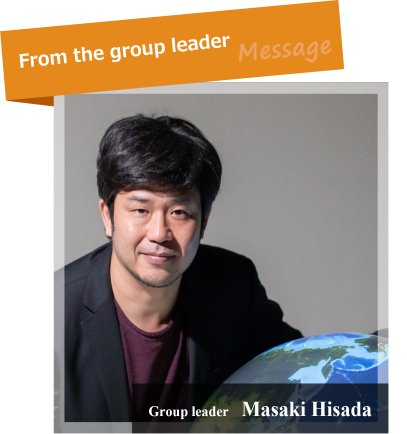
The Global Environmental Futures Forecasting Technology Group is engaged in research applying new ideas and technologies, unconstrained by conventional approaches, covering everything from global environmental sensing, data analysis, and modeling to simulation, with the aim of creating a global environment in which a rich society and diverse organisms coexist. So why not join us in pioneering the future of our planet by utilizing science and technology.
Related content
-

Forefront Research Ini...
NTT Space Environment and Energy Laboratories aims to ...
-

Forefront Initiatives...
Having established unconventional research ...
-

Technology for Forecast...
NTT Space Environment and Energy Laboratories aims...
-

R&D of Innovative T...
It has been two years and seven months since NTT Sp...
-

Earth Information Analy...
We are studying for the realization of real-time, ...
-

Creating next-generatio...
Many technologies that support modern business and ...
-

Position-control Techno...
NTT Space Environment and Energy Laboratories is ...
Technology


Other position under active recruitment
- Research and development of space solar power technology Read more
- Research and development of real-time prediction and control of fusion plasma for optimal operation of fusion reactors Read more
- Research and development on energy networks Read more
- Research and development of technologies for reducing environmental impact utilizing algae and plants Read more
- Research on long-term future-scenario-analysis technology Read more
- Research and development of proactive-environmental-adaptation technologies Read more
- Research and development on environment and socioeconomic nexus forecasting technology Read more
- Research and development related to extreme weather futures forecasting technology Read more
- Research and Development of Wireless Power Transfer Technology Using Electric-Field Resonance Read more
- Research and Development of Ocean-Energy Technology Read more