Initiatives in Manufacturing, Logistics, Finance and Healthcare with IOWN / AI Technologies
The NTT Technology Innovation Center is responsible for the strategy and development of full-stack solutions built around IOWN and AI technologies.
Rather than addressing the issues of individual companies alone, we start from challenges common to an entire industry and combine technologies through two approaches — “AI and data collaboration” and “cloud lift (including robotics)” — to shape solutions that work on our customers’ front lines.
Our focus areas are manufacturing, logistics, finance and healthcare. Working with NTT Group companies and partner companies, we drive an end-to-end process from use case hypothesis testing to joint experiments and technical validation, and on to social implementation.
We codify business models, system designs, build procedures and performance evaluation results into reproducible reference designs, thereby minimizing the upfront investment and lead time required for business deployment.
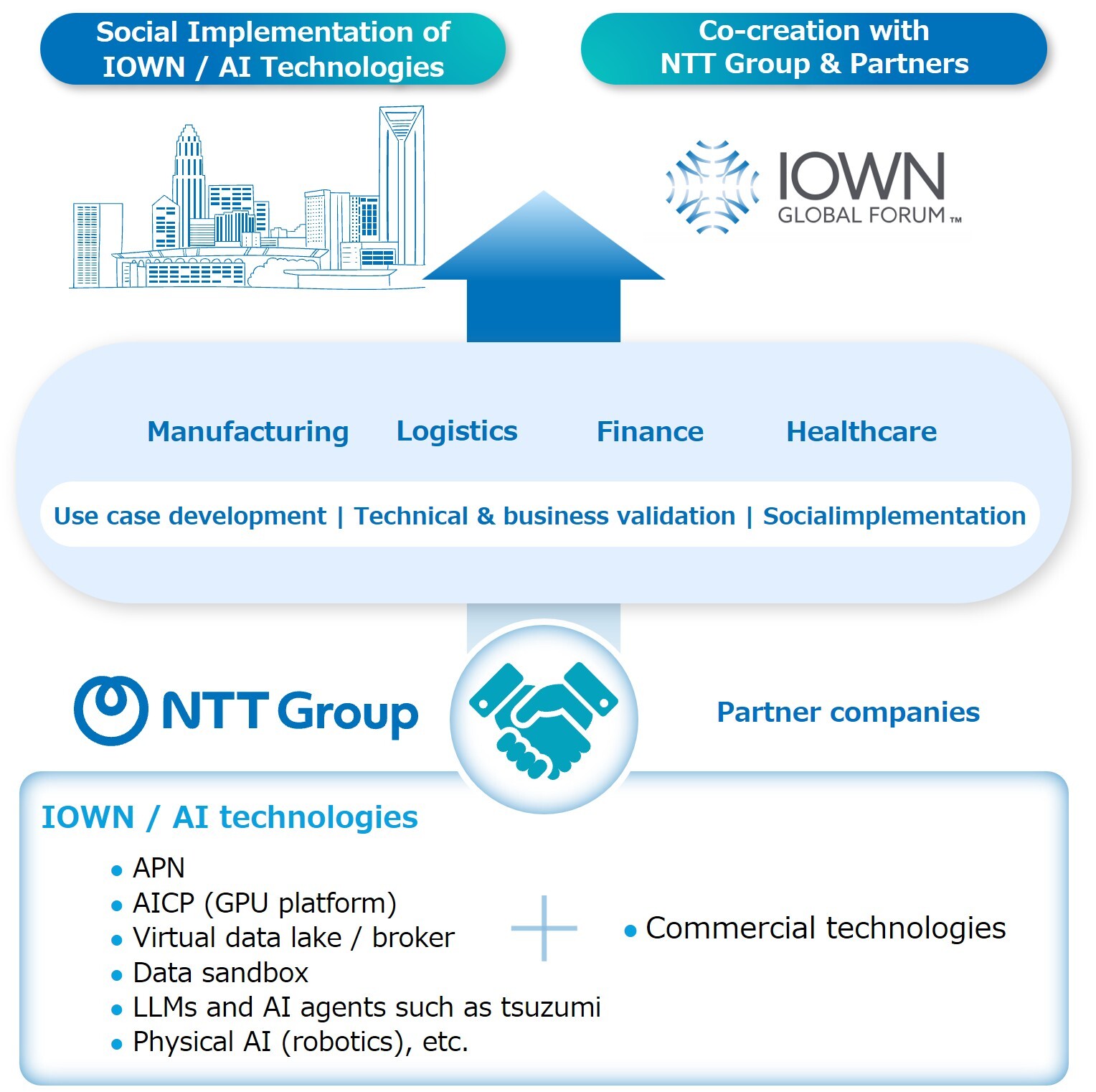
- APN: All-Photonics Network
- AICP: AI Computing Platform
- LLM: Large Language Model
Initiatives in Manufacturing — Smart Factories via Cloud Shift of Operational Technology
On manufacturing floors in Japan, production lines are equipped with large numbers of control and monitoring devices. As AI adoption for tasks such as visual inspection advances, the workload of managing this equipment and its power consumption are becoming major issues.
The NTT Technology Innovation Center combines the low-latency, low-jitter communication of IOWN APN (All-Photonics Network) with RDMA (Remote Direct Memory Access) acceleration technology to pursue a “cloud shift” that consolidates in-factory controllers and GPU servers into data centers. In a joint experiment, we confirmed that production equipment can be controlled on a millisecond-order cycle from a data center some 300 km away, while running industry-standard visual inspection AI on the cloud side.
Through this, we aim to achieve centralized equipment management and faster line reconfiguration, reduced maintenance workload and power consumption, and higher productivity through data collaboration across sites. In the plant domain, we are also validating remote operations that consolidate monitoring and control systems at urban operation centers.
In addition, we are exploring the application of virtual data lakes and data sandboxes as a foundation supporting the distribution and utilization of data generated by supply chains and in-factory sensors.
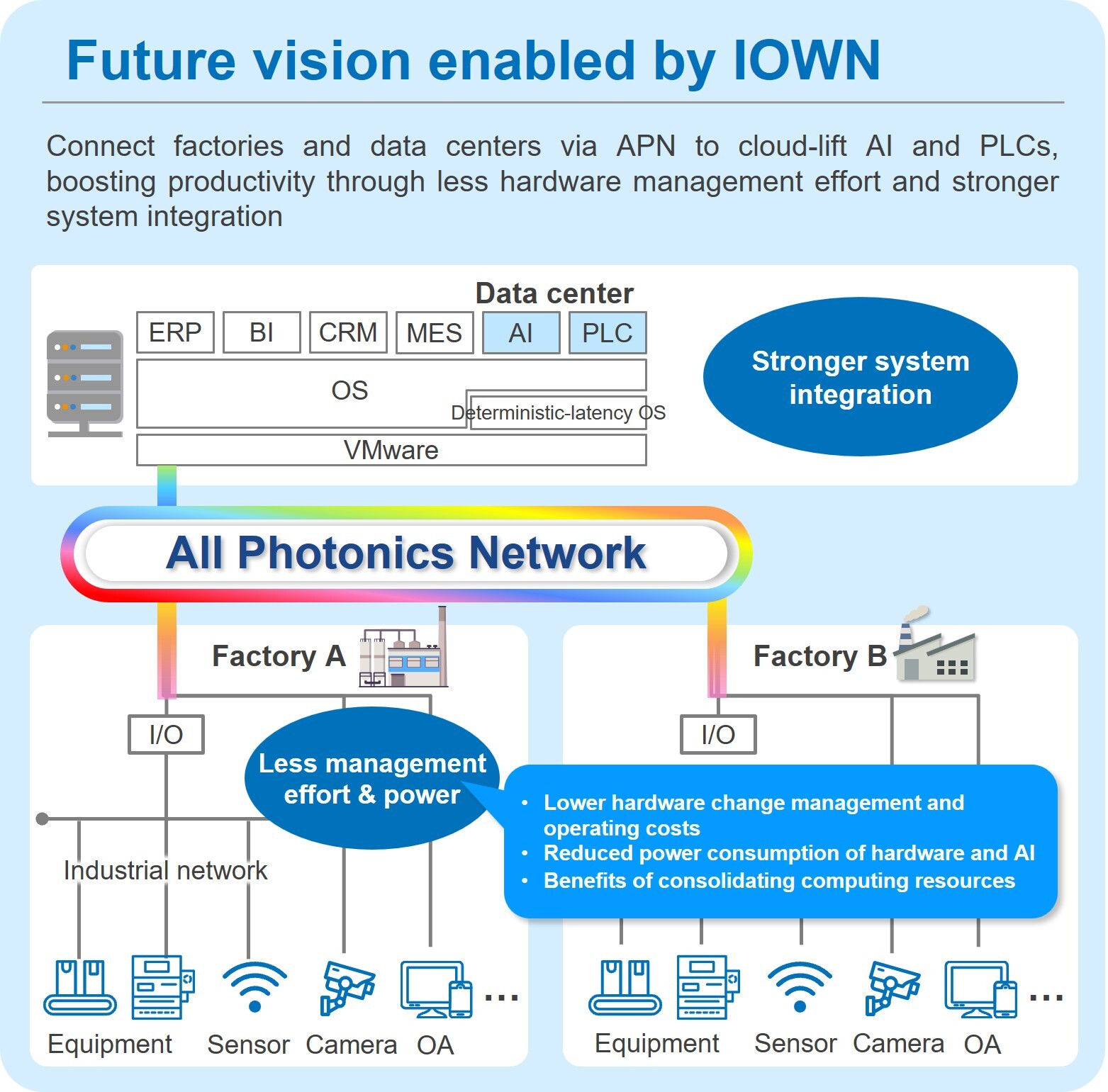
- ERP: Enterprise Resource Planning
- BI: Business Intelligence
- CRM: Customer Relationship Management
- MES: Manufacturing Execution System
- PLC: Programmable Logic Controller
Initiatives in Logistics — Warehouse Eco Central Computing & Physical AI
The logistics industry faces structural challenges such as labor shortages, declining load efficiency and longer waiting times for cargo handling, making advanced automation and data collaboration an urgent priority.
The NTT Technology Innovation Center is applying the cloud-lift expertise cultivated in manufacturing to automated warehouses and material handling equipment, offloading in-warehouse robot control and AI analysis of camera video to remote GPU platforms. By directly connecting warehouses with data centers powered by renewable energy via IOWN APN, we are validating an implementation model that consolidates AI/GPU processing while delivering human-robot collaborative safety and low-latency visualization of movement flows.
We aim to achieve “logistics DX and GX (Green Transformation) together” — advancing labor saving and decarbonization simultaneously while curbing capital investment and maintenance burdens on the warehouse side.
At the same time, using confidential computing technologies that protect the sensitivity of shipper data, we are exploring the potential for sharing logistics information across operators and optimizing the overall supply chain.
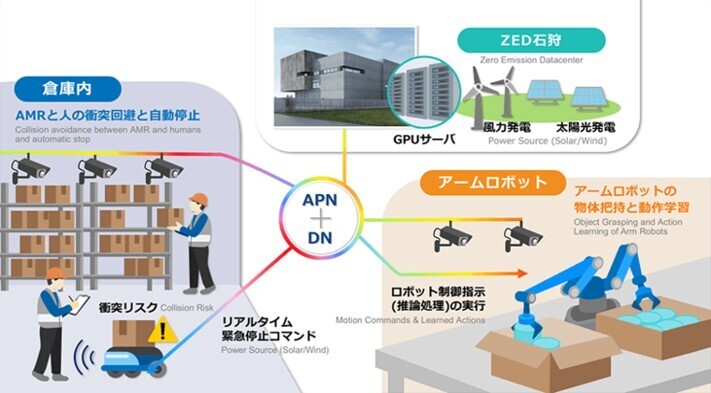
- AMR: Autonomous Mobile Robot
- DN: Deterministic Network
Initiatives in Finance — IOWN Data Hub Technology × AI Agents
The information handled by financial institutions is becoming increasingly diverse — financial data, non-financial information, market trends, counterparty information and more — and data volumes continue to grow. At the same time, there is strong demand for data access governed by robust governance and for the safe use of generative AI.
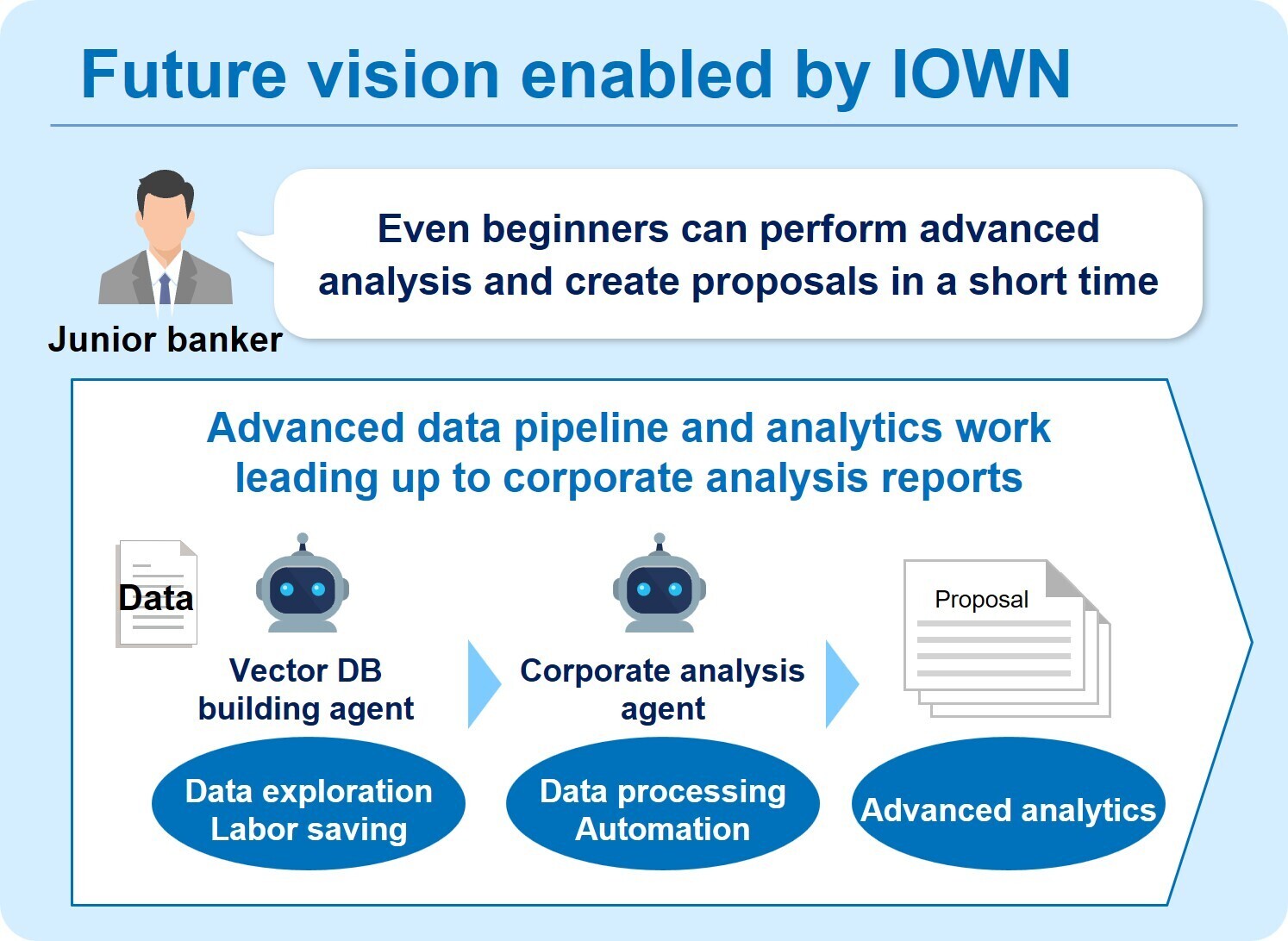
Using “IOWN Data Hub” technology, which consists of a virtual data lake / broker and a data sandbox, the NTT Technology Innovation Center securely integrates data distributed inside and outside the company while preserving the data sovereignty of data providers, and works to enable advanced analytics linked with RAG (Retrieval-Augmented Generation) applications and AI agents.
Going beyond simple data aggregation, this creates value such as more sophisticated corporate value assessment, early risk detection, faster formulation of management and business strategies, and greater responsiveness to market changes — helping establish competitive advantage in a rapidly changing business environment.
Initiatives in Healthcare — Low-Latency Networks & Secure Data Use
In healthcare, major themes include the uneven regional distribution of physicians, responses to work-style reform, and the shift toward “connected medicine” starting with the sharing of electronic medical record information.
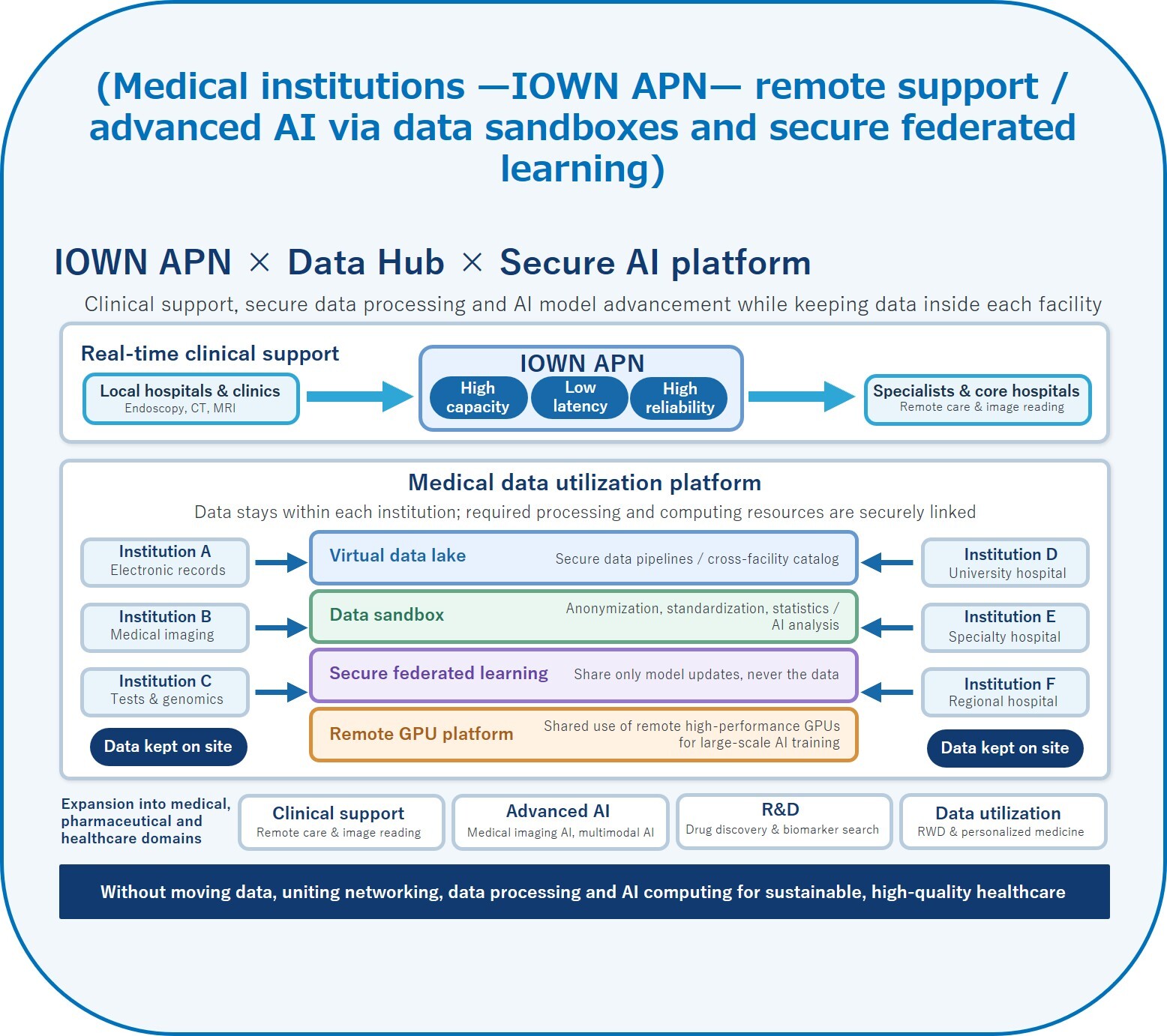
Leveraging the high-capacity, low-latency communication of IOWN APN, the NTT Technology Innovation Center is studying remote clinical support and remote image interpretation that transmit high-definition endoscopic video and medical images to remote locations in real time. We aim to create an environment in which specialists can support care from a distance as if they were on site.
Because medical data is highly sensitive and difficult to share between institutions, we are exploring data sandbox that analyze data without taking it outside, and secure federated learning that trains models jointly without sharing data. The goal is to advance AI models in a way that even institutions without high-performance GPUs can join.
In the pharmaceutical and healthcare domains, we will also contribute to more efficient R&D by linking medical data processing pipelines with data utilization platforms.
- RWD: Real-World Data