Building an Optical Communications Platform Linking Space and Earth
Under its space business brand "NTT C89," the NTT Group is working to realize a Space Integrated Computing Network that connects High Altitude Platform Stations (HAPS), Low Earth Orbit (LEO) satellites, and Geostationary Earth Orbit (GEO) satellites with the ground (Figure 1).
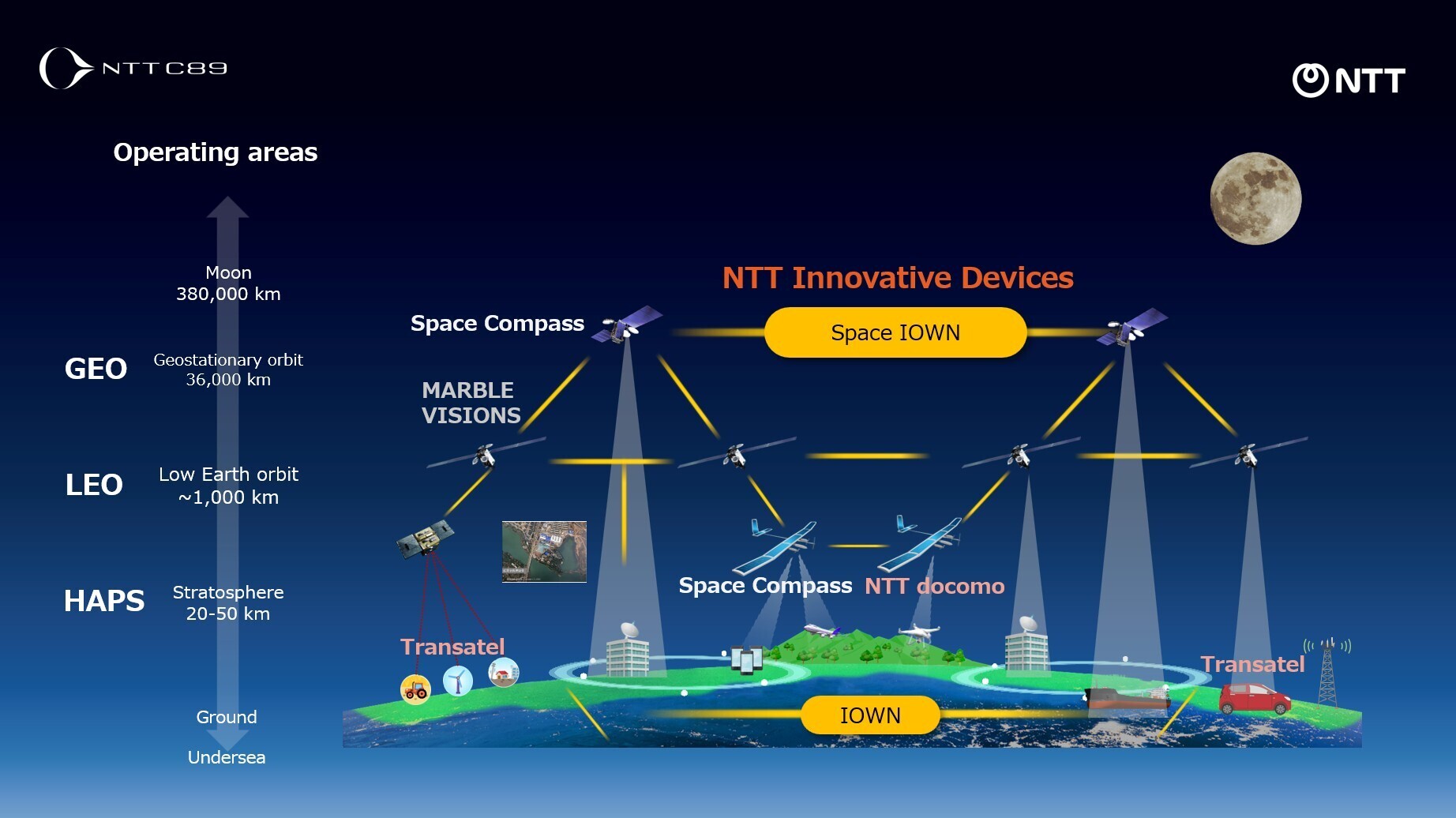
Figure 1: Status of the NTT Group's space business deployment
As LEO satellites proliferate, the volume of data transmitted from space to the ground is expected to grow. Satellite-to-ground links, however, rely mainly on radio waves using finite spectrum, which is allocated through applications governed by international and domestic rules. Securing spectrum therefore depends on filing early, and retaining usage rights requires actually deploying and operating satellites and ground facilities - so investment capacity matters greatly. Against this backdrop, NTT is pursuing optical communications, which require no spectrum allocation, to enter the space communications business by leveraging its high-speed, high-capacity, low-power characteristics (Figure 2).
In particular, NTT aims to apply IOWN technologies cultivated on the ground to space (Figure 3).
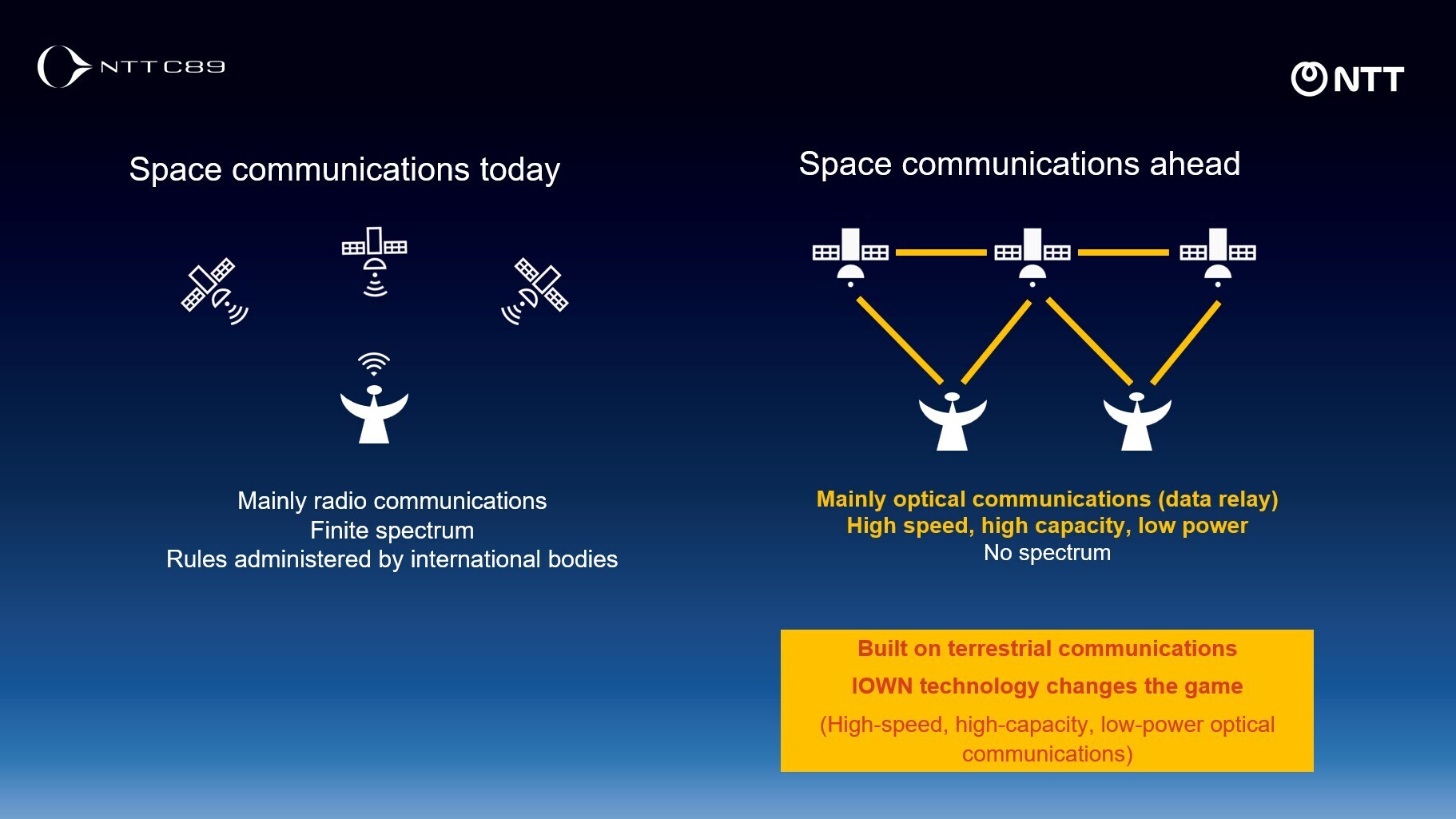
Figure 2
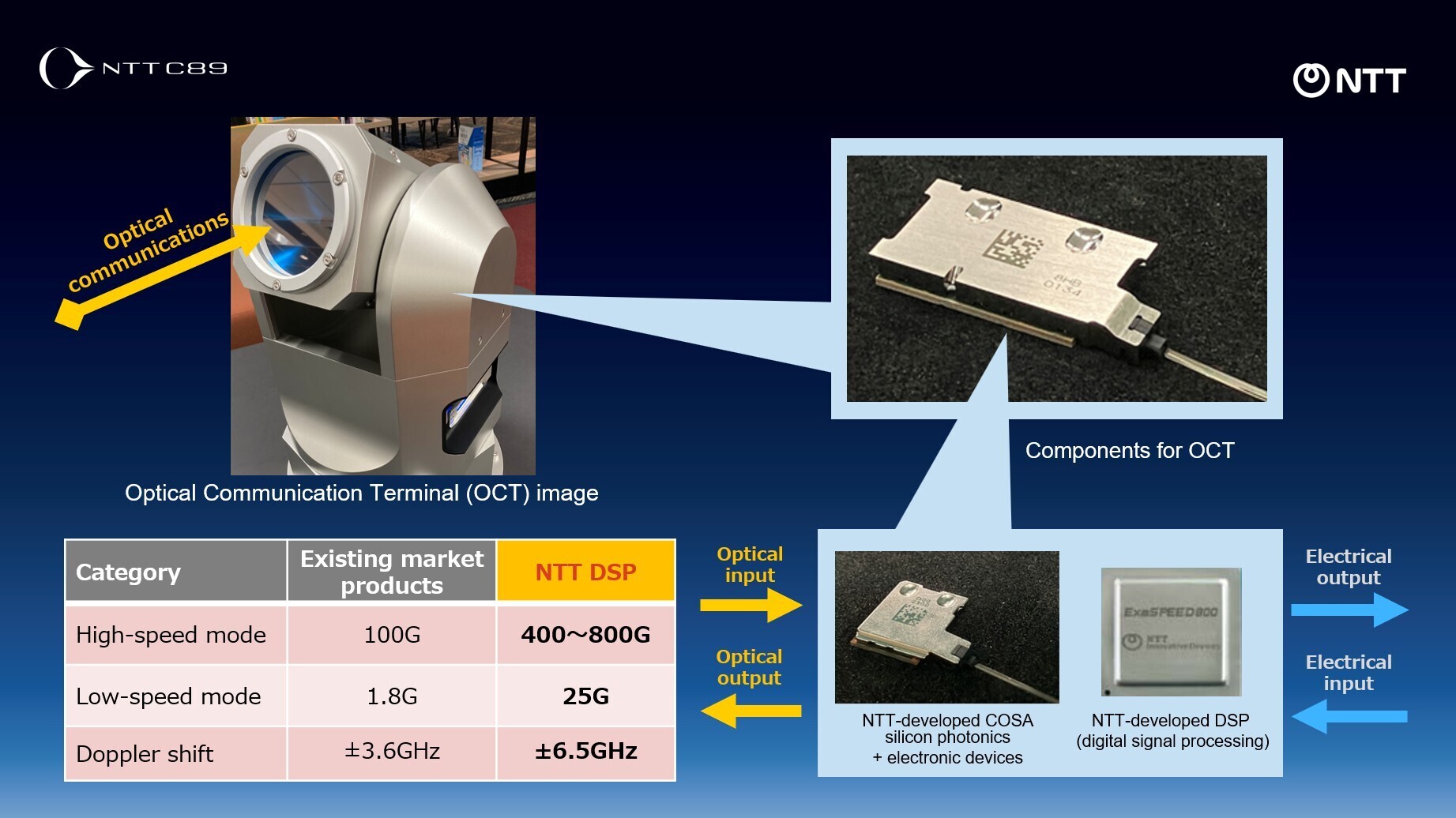
Figure 3
- DSP:Digital Signal Processor
- COSA:Coherent Optical Sub-Assembly
Because optical links are affected by clouds and the atmosphere, a single ground station limits communication opportunities. NTT is therefore developing network control that monitors weather and link conditions at optical ground stations across multiple regions and selects or switches routes to a station that can communicate.
Going forward, NTT will verify optical ground station and network control technologies, define ground facilities and operating schemes, and partner externally to establish a service platform connecting space, the ground, and data centers/cloud.
Glossary
- HAPS (High Altitude Platform Station): A high-altitude platform that stays aloft in the stratosphere and covers wide areas.
- LEO (Low Earth Orbit): Satellites in orbits at altitudes below roughly 1,000 km.
- GEO (Geostationary Earth Orbit): Satellites in geostationary orbit at an altitude of about 36,000 km.
- OCT (Optical Communication Terminal): An optical terminal mounted on satellites and similar platforms that communicates using laser light.