08/31/2020
The world of Digital Twin Computing breaks through the limitations of the physical world to provide value in the form of diversity.NTT Digital Twin Computing Research Center
IOWN aims to realize a smart society through digital transformation, and aims to realize new information and communications infrastructure by incorporating innovative photonic technology into all kinds of information processing infrastructure. The three elements for making this happen are All-Photonics Networks, Cognitive Foundations, and Digital Twin Computing.
To provide an overview of Digital Twin Computing (or "DTC"), we published a white paper (now updated to Edition 2.0) that explains in simple terms the concept, features, and expected applications. Subsequently, we launched the Digital Twin Computing Research Center in March 2020, and have brought partners from specialized fields on board as we enter the stage of concrete discussions. We interviewed Iwaki Toshima of the Digital Twin Computing Research Center, who gave us a fresh explanation of the DTC concept, the future world it will help realize, and his own thoughts as a researcher about realizing DTC.
Interviewee
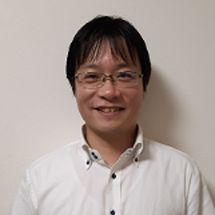
- Iwaki Toshima
- Senior Research Engineer, Unit 01,
NTT Digital Twin Computing Research Center
Replicating the real world as a whole in cyberspace to create interactive worlds.
Vastly expanding upon digital twins to reach the next stage of digital twin computing.
The DTC concept is not something presented as specific technology, but a concept aimed at realizing a new digital society. This a major factor differentiating it from the conventional method of developing technology incrementally over time.
Digital twins have become more common with the development of the IoT, and are now used in fields such as design, manufacturing, and autonomous driving. Digital twins are created by making perfect replicas in cyberspace of the shape, state, and functions of things, and these digital twins are then used for simulations and analysis. Common examples of useful applications of digital twins include engine design for complex aircraft, controlling robots at manufacturing sites, and, in recent years, algorithms to control autonomous driving. In broad terms, CT scans in the medical field, which replicate patients with digital information in order to find lesions, could also be called digital twins. However, with modern digital twins, the scope and precision of digital information is determined by their purpose. In the case of a CT scan, the lesion area alone is adequate for fulfilling its purpose. If the necessary parts can be recreated according to this purpose, then other parts do not have to be recreated precisely. Digital twins created in this manner are limited to their specific uses, so it may be impossible to make them interact with each other.
However, the society of the future is expected to exist in a world overflowing with digital twins. The core of the DTC concept is for NTT to make a new digital world that goes beyond conventional digital twins, to replicate not only things, but all of society, including people as well, using substitution, integration, and replication computing (digital twin computing) to cause various digital twin interactions as part of a new computation paradigm. Thus far, digital twins have been used for specialized purposes, and their use has been confined to controlling and simulating physical things. However, with the DTC concept, we aim to further enrich social systems by making digital twins of society, including people, and build a new, more creative generation of digital society.

Four features of DTC.
In addition to conventional reproduction, DTC enables testing, controlling, and creating.
In addition to conventional "reproduction," DTC will also enable "testing," "controlling," and "creating." "Testing" means to integrate previously separate digital twins and cause interactions between digital twins, making it possible to perform simulations of complex events, and expanding the possibility of providing opportunities that had been missed in research and development. "Controlling" enables automatic consensus in high-level interactions, including internal aspects, making it possible to perform calculations that incorporate opinions that had been discarded in the case of optimization. "Controlling" also falls under the category of predicting and responding to various threats. "Creating" expands decision-making and new human abilities through interaction between digital twins of people that have their own will and feelings.
In a world where this concept has been realized, it will be possible to make revolutionary decisions that incorporate minority opinions from among hundreds of thousands of people, and hold debates among digital twins until they reach a conclusion that satisfies everyone. Digital twins can also be tasked with jobs so that their real people can dedicate themselves to their hobbies or other tasks. Even if such jobs involve complex work in the real world, they may be finished in an instant in cyberspace, where work is freed from physical constraints. Large-scale, high-accuracy predictions and tests conducted with DTC will expand the potential of human intelligence, bringing about a new digital society that can add great value in the form of rich emotional expression, high-level consensus building, and decision-making. The current online world can achieve optimization by making it possible to easily search for anything and disseminate information to anyone, yet it seems that diversity is actually reduced when many people believe the same information to be true. However, it is likely that if digital twins can discuss with each other and draw new conclusions, they will contribute to greater creativity, and further expand diversity in our shrinking digital society.

I will provide some more concrete and understandable examples of what can be realized with DTC, with the scale of digital twins as the key point. Here, too, diversity is a characteristic feature. It is possible to incorporate minority opinions into discovering and solving urban issues. Even in simulations at the scale of the Earth or outer space, instead of modeling with people as a single point, it is possible to do simulations with replicas of each and every individual's characteristics.

Team of modeling human digital twins have started.
At the current stage, three teams are discussing people, things, and cities, respectively.
The DTC Research Center was founded in March 2020 and now has more than 50 researchers, who are divided into three teams, for people, cities, and things. Research involving cities and things requires detailed, large-scale simulations, which will necessitate technologies in addition to IOWN in order to realize them. I am on the people team, and we have a unique character unlike the others. Our mission is to figure out how to realize digital twins of people. We have discussed this topic in great detail, but before the matter of how to make this happen in technical terms, we have started by examining from every angle how we can define the inner aspects and characters of people, and how to model different sorts of personalities.
People each have their own character that defines them. This includes their personality and values, as well as their judgment standards and decision-making habits, and of course their appearance and voice. AI is often compared to this, but AI learning is based on past data, so it will consider everything that was right in the past to be right in the present, even if it should be considered wrong by current values. AI is not a replica of a person in terms of accepting changes in values and making progress. In contrast, digital twins of people recreate their individual interior aspects and social values, so these things must also be updated constantly. Even including only the expected issues, there are many other hurdles on the way to realizing digital twins of people. Ethical matters must also be predicted and modeled, of course including privacy, as well as how to handle trouble, such as when a digital twin commits a crime in cyberspace. It is extremely difficult to factor in how ethics operate and are used in the real world and model them, even in real society. NTT cannot do this on its own, and so it must discuss ethical matters with partners including experts in a broad range of academic disciplines including social science, human science, natural science, and applied chemistry, as well as behavioral science, cognitive science, and communication science. For that reason, we are conducting a much broader search to find many more partners.
An overview of the DTC concept was published in a white paper, after which the DTC Research Center was established. We aim to realize the IOWN concept by 2030, but right now we are still at the stage of discussing what we would like to do among teams in the Center, as well as other divisions of NTT. The DTC concept is part of the IOWN concept, but personally I feel that it is difficult to establish clear figures or goals for DTC in comparison to All-Photonics Networks and Cognitive Foundations. Normally, most research involves establishing reliable technology, and the concepts then emerge. However, DTC started with a concept. From there, we seek cooperation on how technology must evolve, and invite others to discuss matters with us in order to realize the concept. There are certainly some things that remain unclear, and it must seem that we have our heads in the clouds from the perspective of engineers who develop technology step-by-step. However, new things cannot be created with orthodox practices alone. I hope we can serve as an example of how to open new paths in the world with methods not yet found at NTT.
PDF (24 pages / 4,030KB)
Providing diversity with DTC will aid in creating new value.
We will cooperate with our partners in further discussions to realize this concept.
It cannot be denied that world-leading IT companies such as GAFA have utilized their technology to realize maximization and optimization with an emphasis on efficiency, and that they are thereby shrinking diversity. The aim of the DTC concept is to realize a world that is the very opposite of this. There is meaning in making society stronger and providing new value by creating diverse worlds in cyberspace. I feel that the essence of the DTC concept is not to create wealth by improving efficiency, but to attach added value to diversity and contribute to building a society that is more comfortable for many different people to live in. This initiative shows the world that NTT is ready to come to grips with this, and I hope to succeed in this challenge so we can enter a new era by providing new value, and make our presence known both in Japan and abroad.
We have just begun this initiative, and we need new partners in every field. We have also prepared a collaboration framework for undertaking this task, so I hope that people, companies, and organizations who agree with our concept and are interested in it will contact us!
Editor's Note
In the world of DTC, not only things, but also society and even people are extended into cyberspace. It might sound like science fiction to hear that you will have a digital replica capable of making decisions and consensus building, but it is exciting to know that this world will no longer be something from a dream. If the diversity quickly being lost in the current digital world can be put to use, it is possible to imagine a world completely unlike the one we live in today. I am incredibly curious to see how that world will become a reality. Mr. Toshima personally hopes to attempt to make digital twins for jobs in fields that are said to be impossible to replicate at present. There are already many jobs that have been replaced by robots or AI. However, it is believed that some professions based on trust or good sense simply cannot be replaced because people want someone specific to do them, such as physicians, beauticians, or lawyers. Even legal experts I have consulted have told me that this is not a simple thing. However, the challenge we must face is to discover the extent to which these professions can be replaced by digital twins. I was greatly encouraged to hear that if we can produce results in these fields, then the world will take a step forward.
Interview by Kanako Kaisho
on May 25, 2020