Fellows
/Senior Distinguished
Researchers
/Distinguished
Researchers
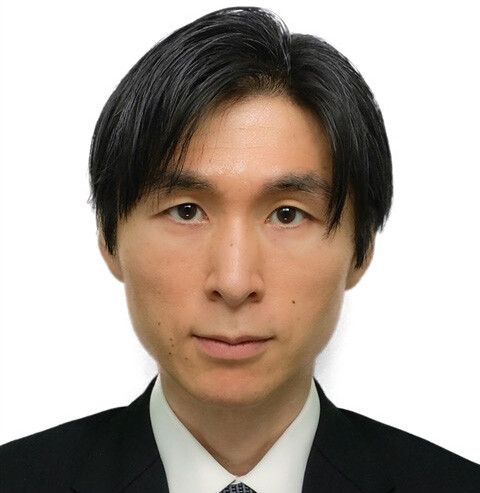
- Distinguished Researcher
Tomoyasu Horikawa
- NTT Communication Science Laboratories
Human Information Science Laboratory
Sensory Representation Research Group
- Distinguished Researcher
More Distinguished Researchers
- AI
More researchers on the field
- Communication Science Laboratories
More researchers belonging to the lab/center/dept
Integrating computational models of the brain and brain data analysis
We aim to understand how the human brain represents and constructs the information of subjective experiences by developing methods for brain data analysis using human functional magnetic resonance imaging and computational models of the brain.
In this page
Awards
- 2018 The 33rd Tele-communication system technique awards 2017, Title: Generic decoding of seen and imagined objects using hierarchical visual features
- 2014 Best paper award of Japanese Neural Network Society, Title: Neural decoding of visual imagery during sleep
Publications
Papers
- Horikawa, T., Kamitani, Y. "Attention modulates neural representation to render reconstructions according to subjective appearance." Commun. Biol. 5, 34 (2022).
- Horikawa, T., Cowen, A.S., Keltner, D., & Kamitani, Y. "The neural representation of visually evoked emotion is high-dimensional, categorical, and distributed across transmodal brain regions" iScience 23, 101060 (2020).
- Shen, G., Horikawa, T., Majima, K.*, & Kamitani, Y. "Deep image reconstruction from human brain activity" PLoS Comput. Biol. 15, e1006633 (2019).
- Horikawa, T. & Kamitani, Y. "Generic decoding of seen and imagined objects using hierarchical visual features" Nat. Commun. 8, 15037 (2017).
- Horikawa, T. & Kamitani, Y. "Hierarchical Neural Representation of Dreamed Objects Revealed by Brain Decoding with Deep Neural Network Features" Front. Comput. Neurosci. (2017).
- Horikawa, T., Tamaki, M., Miyawaki, Y., & Kamitani, Y. "Neural decoding of visual imagery during sleep" Science 340, pp.639-642 (2013).
Keywords
brain decoding, deep neural networks, functional magnetic resonance imaging (fMRI), mental imagery